
We are a leading ERP software product development company in Mumbai, specializing in intelligent, cloud-based ERP solutions.
We are a leading ERP software product development company in Mumbai, specializing in intelligent, cloud-based ERP solutions.
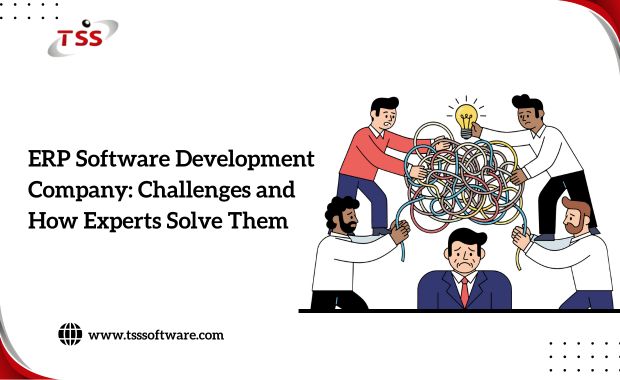
In today’s fast-paced digital landscape, businesses rely heavily on technology to streamline operations, improve decision-making, and stay competitive. Enterprise Resource Planning (ERP) systems play a crucial role in achieving these goals by integrating core business processes such as finance, human resources, supply chain, manufacturing, and customer relationship management into a single unified platform.
However, developing and implementing an ERP system is not a simple task. Every ERP software development company faces multiple technical, operational, and strategic challenges during the process. The difference between a successful ERP solution and a failed one lies in how these challenges are handled. In this blog, we explore the most common challenges faced by ERP software development companies and how experienced experts effectively solve them.
Understanding ERP Software Development
ERP software development involves designing, building, customizing, and deploying software that integrates various business functions into one centralized system. Unlike off-the-shelf solutions, custom ERP systems are tailored to an organization’s specific workflows, industry requirements, and growth plans.
While custom ERP development offers flexibility and scalability, it also introduces complexities that require deep technical expertise, business understanding, and careful planning.
Major Challenges Faced by ERP Software Development Companies
1. Understanding Complex Business Requirements
One of the biggest challenges in ERP development is gathering and understanding detailed business requirements. Organizations often have complex workflows, undocumented processes, and department-specific needs. Misunderstanding these requirements can lead to software that does not align with business goals.
Why it’s challenging:
Different departments have conflicting priorities
Stakeholders may not clearly articulate their needs
Legacy processes may be outdated, but still critical
How experts solve it:
Experienced ERP software development company conduct in-depth requirement analysis through workshops, stakeholder interviews, and process mapping. Experts use tools like Business Process Modelling (BPM) and gap analysis to understand current workflows and design optimized processes before development begins.
2. Customization vs. Standardisation
Businesses often demand extensive customization to match their existing processes. However, over-customization can increase costs, complexity, and future maintenance challenges.
Why it’s challenging:
Excessive customisation leads to longer development time
Difficult upgrades and scalability issues
Higher risk of bugs and performance issues
How experts solve it:
ERP experts strike a balance between customization and standardization. They recommend adopting best practices wherever possible and customizing only where it adds real business value. Modular architecture allows businesses to customize specific features without affecting the core system.
3. Integration with Existing Systems
Most organizations already use multiple software applications, such as CRM systems, accounting tools, inventory software, or third-party APIs. Ensuring seamless integration between the ERP system and existing tools is a major technical challenge.
Why it’s challenging:
Data format incompatibility
Legacy systems with limited integration support
Real-time data synchronisation issues
How experts solve it:
Professional ERP software development company use middleware, APIs, and microservices architecture to enable smooth integration. They also conduct rigorous testing to ensure data flows accurately across systems without duplication or loss.
4. Data Migration and Data Accuracy
Migrating data from legacy systems to a new ERP platform is often a high-risk endeavor. Poor data quality can negatively impact reporting, analytics, and decision-making.
Why it’s challenging:
Inconsistent or duplicate data
Large volumes of historical data
Risk of data loss during migration
How experts solve it:
ERP experts follow a structured data migration strategy that includes data cleansing, validation, and testing. They migrate data in phases and perform multiple trial runs to ensure accuracy. Automated tools are often used to reduce errors and improve efficiency.
5. Scalability and Performance Issues
An ERP system must support business growth. Poorly designed systems may struggle with increased users, transactions, or data volume over time.
Why it’s challenging:
Underestimating future growth
Inefficient database design
Lack of performance optimisation
How experts solve it:
Experienced ERP software development companies design systems with scalability in mind. They use cloud-based infrastructure, load balancing, and optimised databases to ensure the ERP system performs efficiently even as the business expands.
6. Security and Compliance Risks
ERP systems store sensitive business data, including financial records, employee details, and customer information. Ensuring data security and regulatory compliance is a critical challenge.
Why it’s challenging:
Increasing cyber threats
Industry-specific compliance requirements
Unauthorized access risks
How experts solve it:
ERP experts implement advanced security measures such as role-based access control, encryption, multi-factor authentication, and regular security audits. They also ensure compliance with relevant regulations like GDPR, HIPAA, or industry-specific standards.
7. User Adoption and Change Management
Even the most advanced ERP system can fail if users resist adopting it. Employees may find new systems overwhelming or fear changes to their routine work.
Why it’s challenging:
Resistance to change
Lack of proper training
Poor user experience design
How experts solve it
ERP development companies focus on user-centric design and intuitive interfaces. They provide comprehensive training programs, documentation, and ongoing support. Change management strategies help employees understand the benefits of the new system and adapt smoothly.
8. Project Timeline and Budget Constraints
ERP projects are often large-scale and long-term, making them susceptible to delays and budget overruns.
Why it’s challenging:
Scope creep
Unclear requirements
Unexpected technical issues
How experts solve it
Experienced ERP companies use agile or hybrid development methodologies to manage projects efficiently. Regular progress reviews, transparent communication, and phased delivery help control timelines and costs while maintaining quality.
Why Choosing the Right ERP Software Development Company Matters
Not all ERP projects fail due to technology; many fail due to poor planning and lack of expertise. Choosing the right ERP software development company ensures:
Deep understanding of business processes
Industry-specific ERP expertise
Scalable and secure solutions
Reliable post-implementation support
Expert ERP developers act as strategic partners rather than just software providers, helping businesses optimise operations and achieve long-term growth.
Conclusion
ERP software development is a complex process filled with challenges, from requirement gathering and integration to security and user adoption. However, these challenges are not insurmountable. An experienced ERP software development company leverages technical expertise, industry knowledge, and proven methodologies to overcome obstacles and deliver robust, scalable, and efficient ERP solutions.
By addressing challenges proactively and applying expert strategies, businesses can unlock the full potential of ERP systems—improving productivity, enhancing decision-making, and gaining a competitive edge in today’s dynamic market.


Have a project in mind or just exploring your options? Connect with our expert team today.